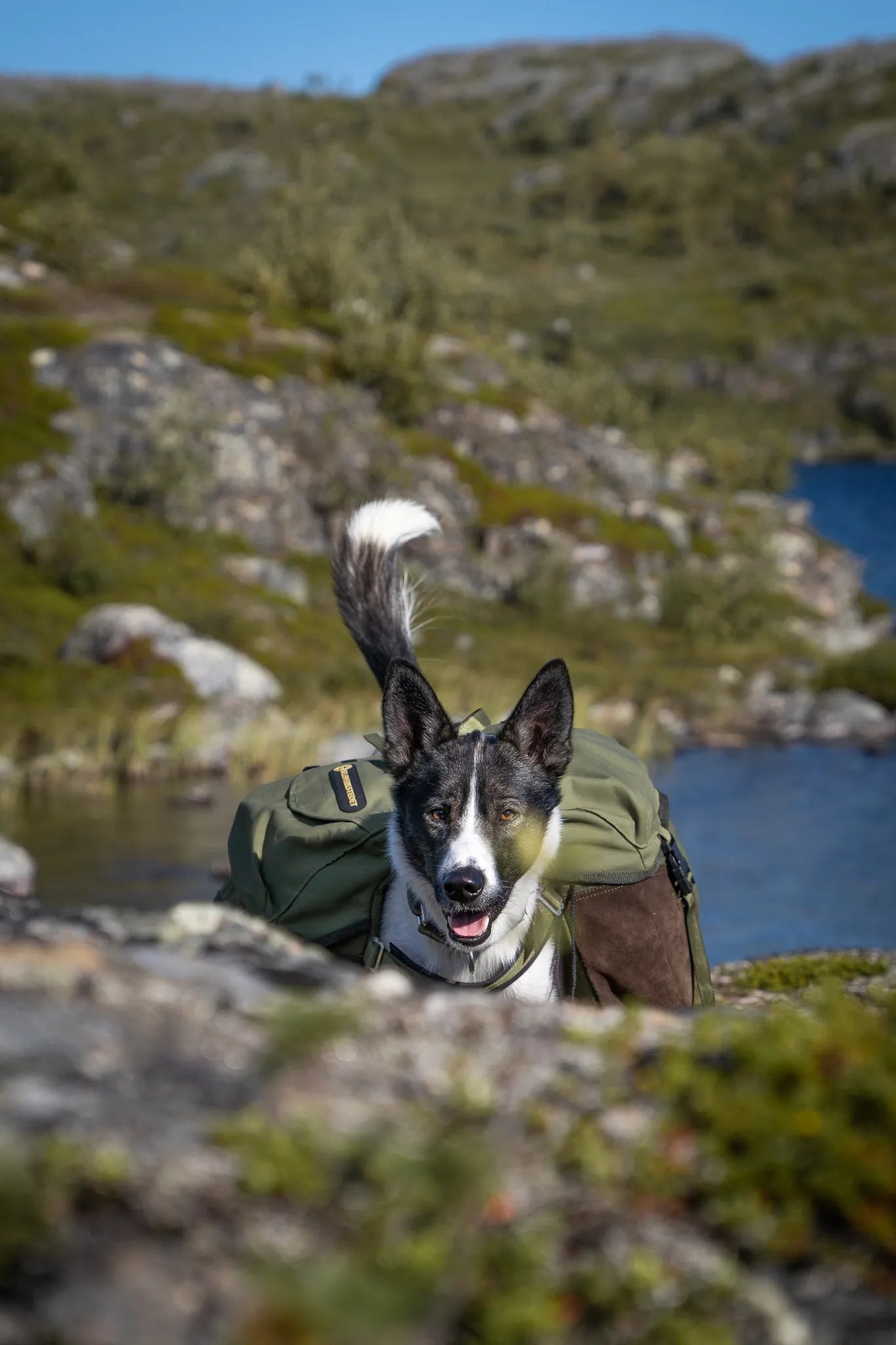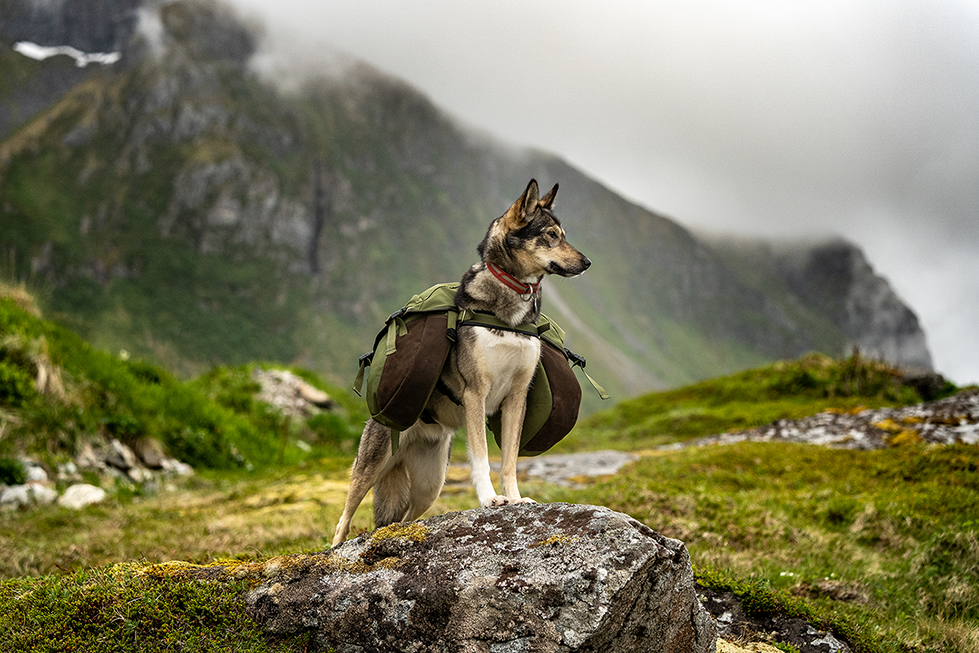
A dog pack is the canine equivalent of our backpack! If you hike a lot, it is also useful to have a dog that can take some of the weight off your own pack during mountain treks, while also providing the dog with a sense of accomplishment. Many dogs are proud to carry something and enjoy having a task to perform on a trip. It can be wise to follow a few guidelines when it comes to training and fitting the pack. We offer you some good advice!
Age
Once the dog has finished growing, you can gradually begin getting it accustomed to the pack. Smaller breeds often reach physical maturity earlier than larger breeds. Most recommend that you start when the dog is around two years old. You can start mental preparations without weight much earlier, since an empty pack doesn't weigh much more than a heavy dog coat. You can teach the dog to be comfortable carrying a pack with some volume (e.g., fill it with bubble wrap), and teach commands such as "go behind," "right/left," start and stop signals, and more.

Physical Requirements
The most important thing is that your dog is physically healthy before you start pack training. The dog should be used to rough terrain and have a good level of basic fitness. Carrying a pack strengthens the dog's shoulder, chest, and upper arm muscles. On uneven terrain, the dog must also use coordination, balance, and stabilizer muscles. Pack training is a great supplement for varied training for your dog. Through conditioning and off-leash training combined with strength training, it can provide a good foundation for a strong and healthy dog. If your dog is overweight, it should lose weight before you start pack training. If the dog has problems with its elbows or front end, or general issues with its musculoskeletal system, you should consult a veterinarian or dog therapist before starting pack training.
Weight
Physical fitness, body shape, physique, terrain, and the length of the hike are decisive factors in how much weight a dog can carry. The dog's temperament and work capacity also determine how heavy or how far you should go. It is demanding to walk in uneven terrain with scree, bogs, and a lot of climbing, both up and down. Flat and easy mountain terrain on trails is, however, less demanding. A well-trained dog can carry 20-25% of its own body weight after proper training. The most important thing, however, is to increase weight and the length of trips gradually and learn to read your dog. A good rule of thumb is to start with approx. 5% of the dog's body weight before gradually increasing the length and difficulty of the trips and then increasing the weight the dog carries. It is not about letting the dog carry as much weight as possible, but rather that it gradually builds good strength in its body and that the dog enjoys the task. To measure what the dog's pack weighs, you can use a fishing scale!
Packing the pack
The contents of the pack should be packed DOWN – IN – FORWARD. This means the heaviest items should be against the dog's body, at the bottom of the pack, and as far forward as possible. Lighter things can be placed on top. Feel free to fill the pack with softer items like socks, a hat, etc., so the contents remain stable. In the introductory phase, you can put bags or other light items that provide volume so the dog gets used to the shape of the pack. Then you can, for example, add filled water bottles, sandbags, or other items that provide a steady, fixed weight during the actual training.
Do not have sharp or pointed objects in the pack. Nor should you include items that are vital or cannot withstand shocks and water (pack in dry bags) in case the dog runs away. Try to pack so that nothing presses against the dog, but ensure even surfaces that conform to the dog's body.
How the pack is packed is very important to avoid uneven weight distribution. The pack should sit stably around the dog's body with equal weight on each side. If something looks unstable when the dog is walking, try placing just a small stone in the lighter side or repack the pack. It is, in fact, how you pack the pack that stabilizes it.

Harness under the pack
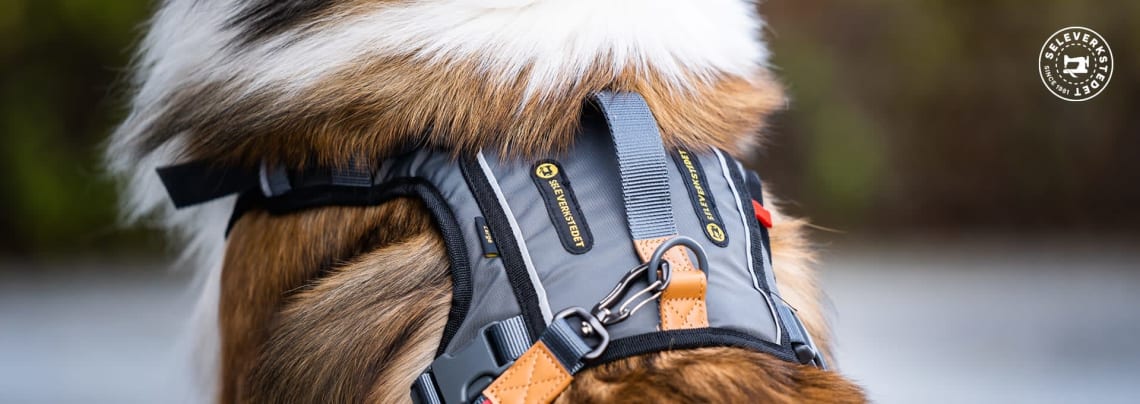
Many have strong dogs that pull hard on the harness. It is recommended to teach the dog to walk nicely on a leash so the dog does not get a double load—that is, both carrying and pulling. However, it is also possible to wear a "nome" harness under the pack. This is a better solution than letting the dog pull hard on the pack, as the chest strap is not suitable for pulling. In that case, ensure that the harness does not have reflectors or other details that stick out, as this can create pressure. Use a harness that is as flat as possible under the pack.
Regardless of whether you use a harness or not, you should always check the dog regularly for chafing. The Togo pack is equipped with a lifting strap. This strap runs along the top of the pack bags from compartment to compartment. When tightened, the compartments move further away from the dog's elbows. This is used when the dog has a very heavy pack to avoid strain, chafing, or wear on the dog's elbows and upper arms.
Be considerate
Going for a hike with a pack is the same for the dog as it is when we walk with a large, heavy backpack. It provides good exercise, but it is very important that the pack is packed correctly, does not have bulges against the back, and is not too heavy compared to what we are trained to carry. Think about what is important to you when carrying a very heavy pack. It makes it easier to know what you should check regularly and be mindful of, both during the trip and when packing the dog's pack.

Advice for pack training
- Start training when your dog is well-trained and physically fully grown.
- Start with an empty pack before gradually increasing the weight.
- Pack down, in, and forward in the pack.
- Remember to train in the same varied terrain you intend to travel in on long trips.
- Walking up and down, navigating forests, bogs, and the like is much harder than flat mountain terrain.
- Check regularly for chafing on longer trips.
- Compare the dog's pack to your heavy backpack.
- Good ergonomics and a pack that fits your dog well are important to avoid strain injuries.
- Take breaks, build fitness gradually, and enjoy the trip!
Do you want to win a Togo pack? Our partner www.thereseoghundene.no offers an online pack course where you can learn everything you need to know to get started with developmental pack training for your dog. Sign up by June 15th and you will be entered into the draw for a Togo pack. Link to the course: https://www.thereseoghundene.no/klovkurs-presale-landing-page-1
The Togo pack
The Togo pack is well-known to many for its robustness and solid design for hikers. It now comes in a renewed design, but still with the same good and solid details.
The Togo pack features leather details on the side and front that withstand wear from bushes and rocks. It has both front and rear belly straps made of solid elastic that prevent the pack from sliding over the dog's head when it drinks or walks steeply downhill. It has a padded chest strap and an adjustable glide-end that ensures the pack is not pulled off balance when the dog walks unevenly beside you. It has 6 external buckles, a raised top compartment with pockets, and a main compartment with a snow lock. You can also purchase parts like chest straps, an adjustable glide-end, and a belly strap set.